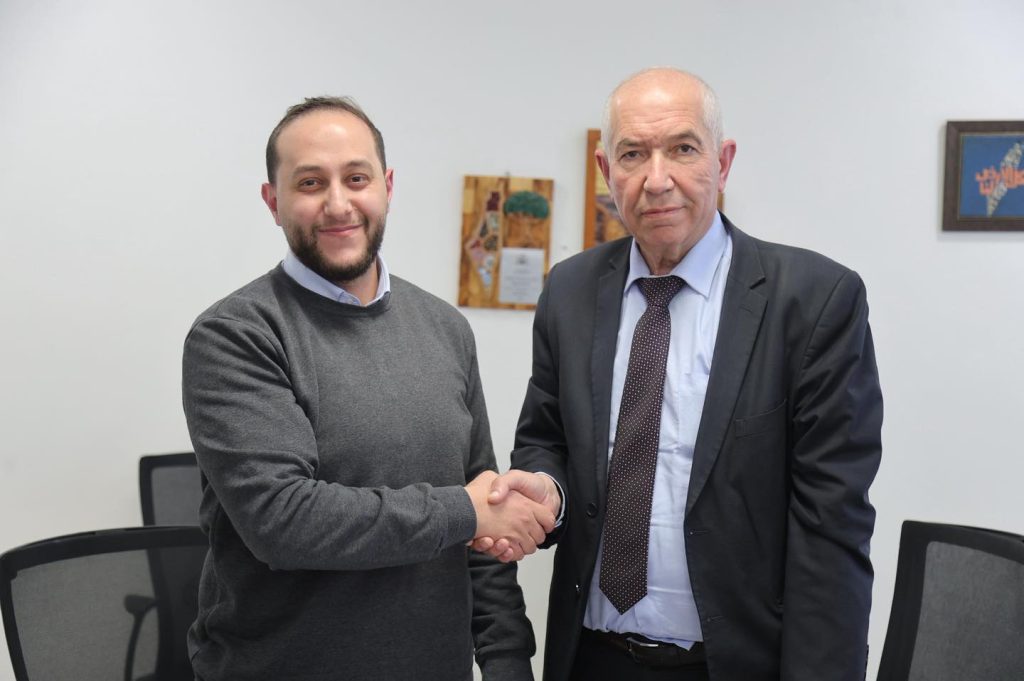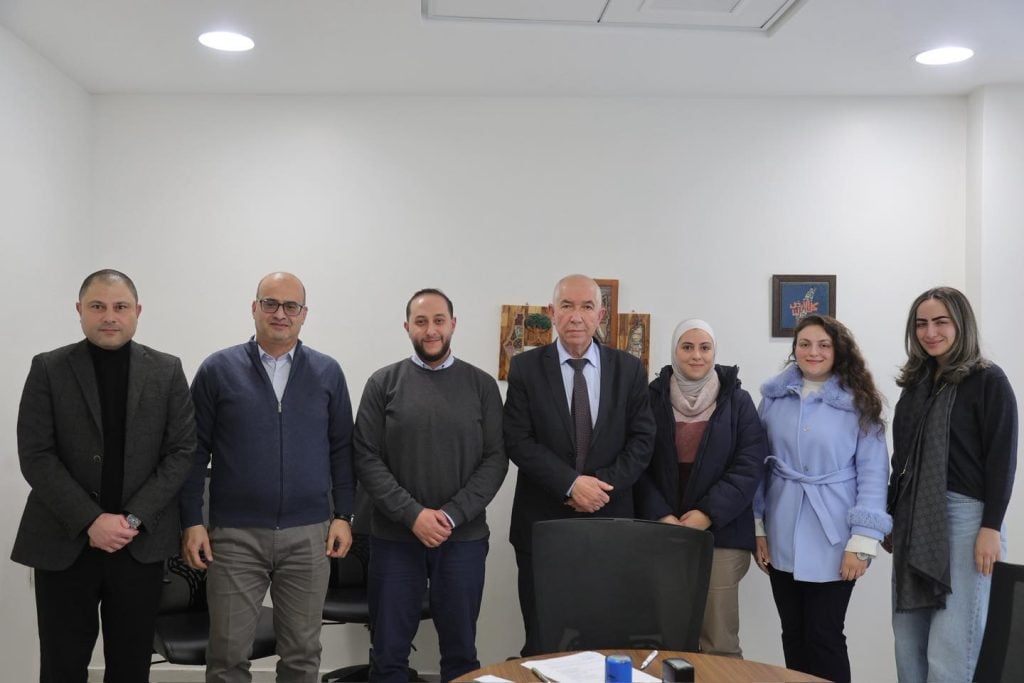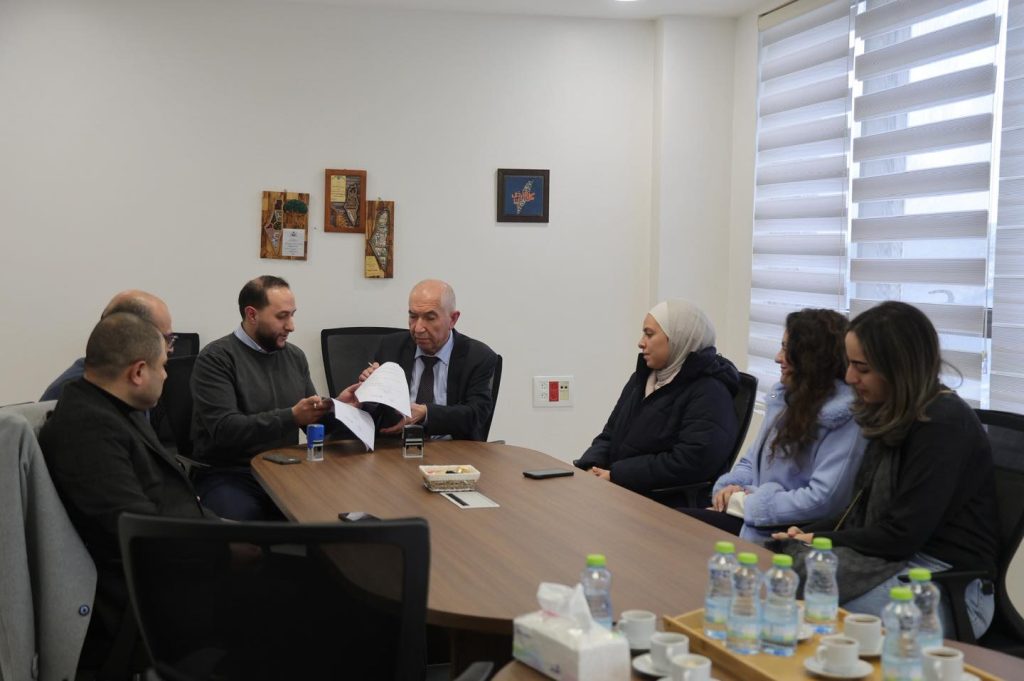
Al-Zaytoonah University of Science and Technology has signed A memorandum of understanding with Ghadeer Future Accelerators Company, aimed at enhancing continuous training programs in technological fields. This aligns with the university's orientation toward supporting applied education and developing digital skills through effective partnerships with the private sector, which contribute to serving the local community and supporting economic development.
The memorandum was signed at the university's headquarters in the presence of Professor Dr. Dawood Al-Zaatari, President of the University; Dr. Samer Bali, Dean of the Intermediate Technical College; Dr. Samer Attia, Director of Financial and Administrative Affairs; and, representing the company, Mr. Majed Jouhari, Chief Executive Officer of Ghadeer Future Accelerators Company; Ms. Lina Fritkh, Business Development Manager; along with a number of company employees.
The memorandum of understanding aims to implement specialized and professional training programs in the fields of cybersecurity, artificial intelligence, and digital technologies, through the university's Center for Continuing Education. The university will oversee the academic and organizational aspects of these programs, while Ghadeer Future Accelerators Company will act as the executive partner for the technical and operational aspects, ensuring the quality of the programs and their alignment with labor market needs.
Additionally, during the signing meeting, both parties discussed prospects for developing future cooperation and expanding the areas of partnership in ways that serve the local community and contribute to national economic development. This will be achieved through enhancing trainees' skills, preparing youth for the labor market, and promoting employment opportunities in promising technological sectors.
Both parties emphasized the importance of this partnership in supporting the applied education system and linking training outcomes to market needs, thereby enhancing employment and entrepreneurship opportunities, and supporting the shift toward a knowledge-based economy founded on innovation and technology.