

Overview
The vision of the Deanship of Scientific Research is based on creating the appropriate conditions for establishing a friendly research environment, and developing the infrastructure related to scientific research with the aim of enabling Al-Zaytouna University for Science and Technology to gain a national, local and regional reputation, and in developing its overall research performance to serve the local Palestinian community.
Vision
The vision of the Deanship of Scientific Research is based on creating the appropriate conditions for establishing a friendly research environment, and developing the infrastructure related to scientific research with the aim of enabling Al-Zaytouna University for Science and Technology to gain a national, local and regional reputation, and in developing its overall research performance to serve the local Palestinian community.
Message
The mission of the Deanship of Scientific Research at Al-Zaytuna University for Science and Technology is to achieve excellence and leadership in the field of scientific research by developing the infrastructure that leads to distinguished scientific research, encouraging researchers and academics at the university to conduct research of international and recognized academic reputation, and creating a stimulating and encouraging environment for producing high-quality scientific research in various fields of knowledge in science, engineering, medicine, management, and other fields of knowledge.
Dear members of our academic community, researchers, and students,
It is my pleasure to welcome you to the Scientific Research Council at Al-Zaytuna University of Science and Technology, a platform for innovation and excellence.
We believe that scientific research is the primary driver of societal progress and the cornerstone of our university’s standing in international forums.
Therefore, the Council is committed to providing a stimulating and sustainable research environment that supports innovators and fosters pioneering ideas and creative solutions.
We strive to strengthen local and global partnerships and align our scientific output with the needs of various industrial and technological sectors.
Our focus is on the quality of scientific publications in reputable journals and on translating theoretical research into practical applications that serve humanity.
We invite all faculty members and graduate students to invest their energies and direct their passion toward intellectual excellence.
Together, we will continue to write our university’s success story, ensuring that Al-Zaytuna remains a beacon of science and knowledge and a vital contributor to comprehensive development.
Chairman of the Scientific Research Council
Dr. Eman Shaqour
Scientific Research Council

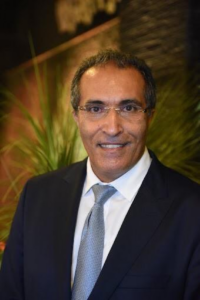
Dr. Eman Shaqour
Associate Professor of Architecture - Chairman of the Scientific Research Council

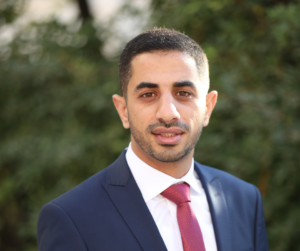
Dr. Kinda Abu Asbah
Assistant Professor of Mathematics - Member of the Scientific Research Council
Dr. Hudhaifa Al Jabari
ssistant Professor / Department of Accounting - Member of the Scientific Research Council
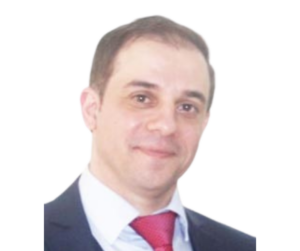
Dr. Muhannad Alhudhud
Assistant Professor of Chemistry - Member of the Scientific Research Council
search and Academic Promotion Regulations
Chapter One: Definitions and General Objectives
Article (1): Title and Commencement
These regulations shall be called the “Regulations for Research and Academic Promotion at the University,” and shall come into effect from the date of their approval by the Board of Trustees/Council of Deans.
Article (2): Definitions
The following words and phrases have the meanings assigned to them below:
University: The university issuing the regulations.
Council: The Deans’ Council or the Higher Academic Promotions Committee.
Committee: The Promotions and Scientific Research Committee of the college/department.
Scientific Output: Research papers, studies, authored or translated books, and patents.
Accredited Journals: Peer-reviewed scientific journals indexed in reputable international databases (such as Scopus and Web of Science).
Chapter Two: Instructions and Conditions for Scientific Research
Article (3): Objectives of Scientific Research
Through this system, the university aims to:
Encouraging faculty members to innovate and publish outstanding scientific research.
Linking scientific research to the requirements of sustainable development and solving societal and industrial problems.
Raising the university’s global academic ranking.
Article (4): Funding and Supporting Research
The university allocates a minimum of 5% of its annual budget to support scientific research projects for faculty and students.
To receive financial support, a comprehensive research proposal must be submitted and reviewed by the department and college committees for approval.
Researchers are required to acknowledge the university’s financial support in the published research (acknowledgment).
Chapter Three: Conditions and Regulations for Academic Promotion
Article (5): General Conditions for Applying for Promotion
The following conditions must be met by a faculty member applying for promotion:
The candidate must have completed the minimum legally required period in their current rank (usually five full years).
They must demonstrate success in teaching and excellence in academic conduct and service to the university and local community.
They must have produced valuable scholarly work that has been published or accepted for publication while holding their current rank. Any scholarly work submitted for a previous promotion or derived from their doctoral dissertation will not be considered.
Article (6): Specifications of acceptable scientific output
Research must be published in peer-reviewed and indexed scientific journals (the university determines the required index, such as Q1, Q2, Q3).
Authored or translated books are accepted for promotion purposes, provided they have been peer-reviewed by a scientific body accredited by the university, with a maximum of one book per application.
Patents officially registered at the international level are treated as published research after evaluation by the Deanship of Scientific Research.
Article (7): Points Calculation and Ranking (Authorship)
Applicants must be the primary author or corresponding author for at least half of the submitted research.
Points for collaborative research are distributed as follows:
Solo researcher: Receives full marks (100%).
Co-author (first): Receives 70% of the research weight.
Co-author (second or last): Receives 50% of the research weight, or as determined by the internal committees.
Chapter Four: Academic Rank Requirements
Article (8): Promotion to the Rank of Associate Professor
The following conditions must be met for promotion from Assistant Professor to Associate Professor:
At least five (5) years of experience as an assistant professor.
Submission of at least five (5) published or accepted research papers in peer-reviewed journals.
The applicant must be the principal investigator on at least three (3) of these papers.
Article (9): Promotion to the Rank of (Professor)
The following conditions must be met for promotion from Associate Professor to Professor:
At least five (5) years of experience as an associate professor.
Submission of at least eight (8) published or accepted research papers in journals with a high impact factor.
The applicant must be the principal investigator on at least four (4) of these papers.
Chapter Five: External Evaluation and Arbitration Procedures
Article (10): Stages of the Promotion File Process
A faculty member submits a formal application to the department chair, along with their academic and teaching portfolio.
The department forms a confidential committee to review the portfolio and ensure it meets the formal requirements. The application is then forwarded to the college committee, and subsequently to the Deanship of Scientific Research and the Deans’ Council.
The Deans’ Council selects (in strict confidentiality) three external reviewers of the rank of professor from prestigious universities (preferably international) to evaluate the scholarly output.
Promotion is granted if at least two of the three reviewers approve the applicant’s promotion and the validity of their research.
Article (11): General Provisions
The council has the right to withdraw the promotion file or cancel the decision if it is proven that there is scientific plagiarism in any of the submitted research, and the member shall be referred to an investigation and disciplinary committee.
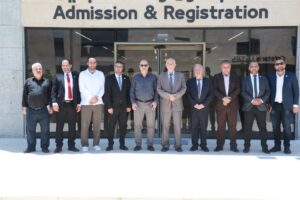
Signing of an academic memorandum of understanding between Al-Zaytuna University for Science and Technology and the Palestine Institute for National Security Research for academic cooperation
Al-Zaytuna University for Science and Technology, represented by its President, Professor Dr. Daoud Al-Zaatari, signed an academic memorandum of understanding with the Palestine Institute for National Security Research. The signing ceremony was attended by a university delegation including Dr. Fahoum Al-Shalabi, Vice President for Administrative and Financial Affairs; Dr. Bilal
Research and Academic Development Program (RADP)
Governance of excellence, fostering innovation, and improving global rankings
Introduction and target audience
The Research and Academic Development Program is a strategic initiative aimed at empowering faculty members, researchers, and graduate students with modern scientific research tools and best academic practices. The program seeks to bridge the gap between theoretical knowledge and globally competitive, high-quality scientific output, positively impacting the quality of education, academic advancement, and the institution’s international ranking.
Program Objectives
Developing International Publishing Skills: Training participants to write research according to the standards of international journals indexed in Scopus and Web of Science.
Preparing Faculty for Academic Promotion: Assisting faculty members in building a comprehensive promotion portfolio that meets the university’s strict legal requirements and standards.
Innovation and Curriculum Development: Enhancing faculty members’ proficiency in modern teaching methods and digital academic assessment.
Securing External Funding: Building researchers’ capacity to write research proposals to win local and international grants and funding.
The main themes of the program
First axis: Research development and excellence
Producing high-impact research: Selecting high-impact research topics and avoiding duplicate research.
Effective academic writing: Skills in drafting scientific papers in English, writing concise abstracts, and structuring research (IMRaD).
Research ethics and academic integrity: Training in plagiarism detection and verification software (such as Turnitin), and avoiding predatory journals.
Statistical analysis and data: Advanced workshops in using statistical software (such as SPSS, R, Python) for data processing and analysis, and referencing (Mendeley/EndNote).
Second axis: Academic and teaching development
Modern Teaching Strategies: Adopting blended learning, flipped classroom, and project-based learning techniques.
Measurement and Assessment: Designing advanced academic tests and developing rubrics to accurately measure learning outcomes.
Integrating Artificial Intelligence: Safe and responsible use of generative AI tools in lesson planning, while maintaining academic integrity.
Expected Program Outcomes
Upon completion of the program cycle, the following results are expected to be achieved:
Increasing the institution’s annual scientific publication rate in top-tier journals (Q1 & Q2).
Accelerating the academic promotion process for faculty members due to the readiness and fulfillment of their files.
Building collaborative research networks internally and externally to produce interdisciplinary research.
Enabling faculty members to obtain accredited professional development certificates to be added to their CVs.
Administrative Note: This program is implemented over a full academic year through a series of interactive workshops, individual consultations, and seminars, supervised by a select group of experts and researchers with high research indicators (High H-Index).
The Scientific Awards and Research Excellence System
Recognizing leadership, stimulating innovation, and advancing knowledge production
Vision and Objectives
Scientific awards are a cornerstone of prestigious academic institutions, fostering a competitive environment that attracts and stimulates innovation. These awards aim to recognize faculty members and researchers who actively contribute to enriching human knowledge and providing practical solutions to societal and industrial challenges, thereby directly enhancing the institution’s academic reputation both locally and internationally.
Proposed categories for scientific awards
To ensure that the recognition is comprehensive and covers all aspects of academic activity, the awards are divided into the following categories:
a. Distinguished Researcher Award
Description: Awarded to the researcher with the highest quantitative and qualitative scientific publication record during the academic year.
Criteria: Number of articles published in top-tier journals ($1 and $2), number of citations received, and H-index value.
b. High-Impact Publication Award for publication in prestigious international journals
- Description: Awarded to the researcher or research team who succeeds in publishing a scientific paper in journals with an exceptional impact factor (such as Nature or Science journals or journals ranked in the top 5% of the discipline).
c. Award for Best Book (Author or Translator)
- Description: It is awarded to faculty members who enrich the academic library with scientific reference works or translations that have undergone rigorous scientific peer review by accredited international or university publishing houses.
d. Innovation and Patents Award
- Description: It is awarded to researchers who have managed to register official patents (regional or international) that open up prospects for industrial and commercial application, and transform theoretical research into a tangible product.
e. Rising Star / Young Researcher Award
- Description: It is dedicated to young researchers, teaching assistants, and research assistants with the aim of motivating them and supporting their first steps in the journey of international publishing and scientific excellence.
General conditions for nomination and acceptance
Applicants must be officially affiliated with the institution (faculty member, researcher, or graduate student), and the research must bear the institution’s name (affiliation).
The submitted research must be original and innovative, and completely free of any practices that violate research ethics or have high plagiarism rates.
Researchers may not submit the same research for more than one award within the institution during the same application cycle.
Incentives and rewards
The incentives for scientific awards vary and include both material and moral aspects that support the academic’s career path:
Financial support: Direct cash rewards commensurate with the award amount and publication ranking.
Reputational advantages: The award is considered a strong advantage when applying for academic promotion or leadership positions.
Recognition: An official certificate of appreciation and commemorative plaques presented at the institution’s annual Scientific Excellence Awards ceremony, along with media coverage of the achievement.
Golden rule: Scientific awards are not just a financial honor, but the most successful investment for educational institutions to ensure they remain at the forefront of global research rankings and to direct energies towards research with real applied value.